Finding the true ring size
A finger gauge must pass over the knuckle before it sits at the base of the finger. If the joint is wider than the lower digit, the knuckle dictates the final size. Have the customer push the ring over the joint twice to verify the fit. Wide bands bridge more skin and drag harder across the knuckle, which requires stepping up a half size or full size compared to a narrow band gauge. Gauge sets with flat insides give a tighter reading than comfort fit bands of the same stated diameter.
How temperature alters finger volume
Hands change volume throughout the day. Cold fingers in winter or early morning contract and read small. Hands measured at the end of a shift or in a warm room swell with fluid. A ring fitted in July can slide loose by January, and a ring fitted in an overheated showroom can pinch when the customer steps outside. Take note of room temperature and hand warmth before writing down a size, and recheck fingers that feel cold to the touch after the customer warms their hands.
Color temperature in stone grading
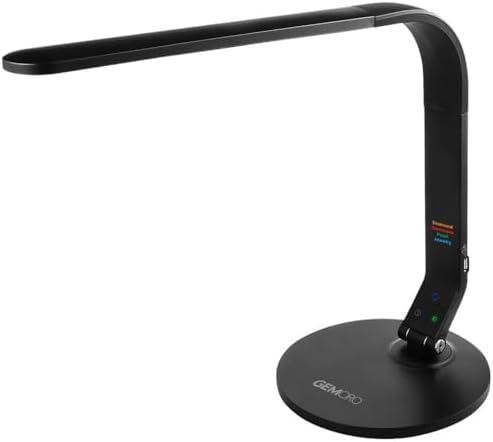
A grading lamp must provide balanced white light across the entire work surface. Standard bench bulbs skew either warm or blue, which distorts diamond color grades. A warm incandescent bulb masks faint yellow tints in low color stones, making an M color look cleaner than it is. A bulb that runs too cool or spikes in the blue spectrum cancels out natural body color, making a tinted stone appear icy. Reliable color sorting requires a neutral light source that does not drift as it warms up.
Shadows and diffusers at the bench
Direct bare bulbs cast hard point reflections off diamond facets. These hot spots blind the eye to subtle body color and mask tiny inclusions against bright table glare. A proper grading fixture uses a diffuser or balanced tube array to spread light evenly from multiple angles. This shadow-free field lets you inspect the stone through the pavilion without glare washing out the tint. Consistent diffusion ensures the stone looks identical whether held dead center or shifted two inches to the side of the tray.
Why two benches see different colors
When two jewelers disagree on a color grade, the difference is often their lamps rather than their eyes. A bench near a window gets mixed daylight that changes from morning to afternoon, while an interior bench under mixed fluorescent tubes sees an entirely different spectrum. Standardizing the light source across every station removes these discrepancies. If you sort stones under one lamp and your setter works under another, verify the piece under a dedicated, shielded grading light before confirming the match.
Measure with stable standards
Do not guess finger dimensions or evaluate diamond color under mixed room lighting. A calibrated finger gauge accounts for band width and joint clearance, while a neutral grading lamp reveals true stone tint without hot spots. Using fixed reference tools at the bench prevents sizing remakes and stops color disputes before stones reach the mounting.